
Outlook Feedback Loop Is Transitioning to ARF: Recipient Address No Longer Available
2026/06/16 by Olivier Moulene.

Microsoft is retiring its Smart Network Data Services (SNDS) portal after nearly two decades.
Beyond confirming access to their SNDS accounts and refreshing ownership of their managed IP ranges, some senders will also need to update their complaint-processing workflows to accommodate the new JMRP complaint data format.
This is especially important for senders who rely on the email address found in the X-HmXmrOriginalRecipient header of the legacy format to match complaint reports back to their original recipients.
The new complaint format (which fully conforms to the ARF standard) no longer includes any field for the original recipient address.
That said, the new format does retain all X-headers, the message ID, and the envelope sender address.
The original email headers are included in the complaint report as a message/rfc822 MIME part, but the original To: field is obfuscated as follows:
To: Undisclosed Recipients <X>As a result, senders who previously relied on the recipient's address to process complaints will need to adapt their workflow and use one of the following alternatives:
- A custom X-header containing a unique message identifier
- The Message-ID header
- The envelope From address (RFC5321.MailFrom), if they are already using the VERP format for it
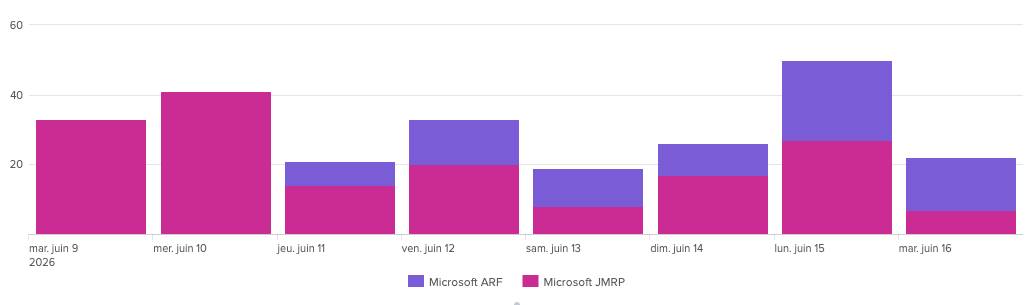
The transition to the new ARF format began on June 11 and is already well underway, with ARF gradually becoming the dominant format.
The chart below shows how the distribution of Outlook complaints by format type has evolved over time for one of the senders we monitor.
If you need any help to ensure that you are ready to that new Microsoft JMRP ARF Compliant Format, you can contact the Postmastery Team
There are many more interesting blogs by category for you to read.
Categories
Featured